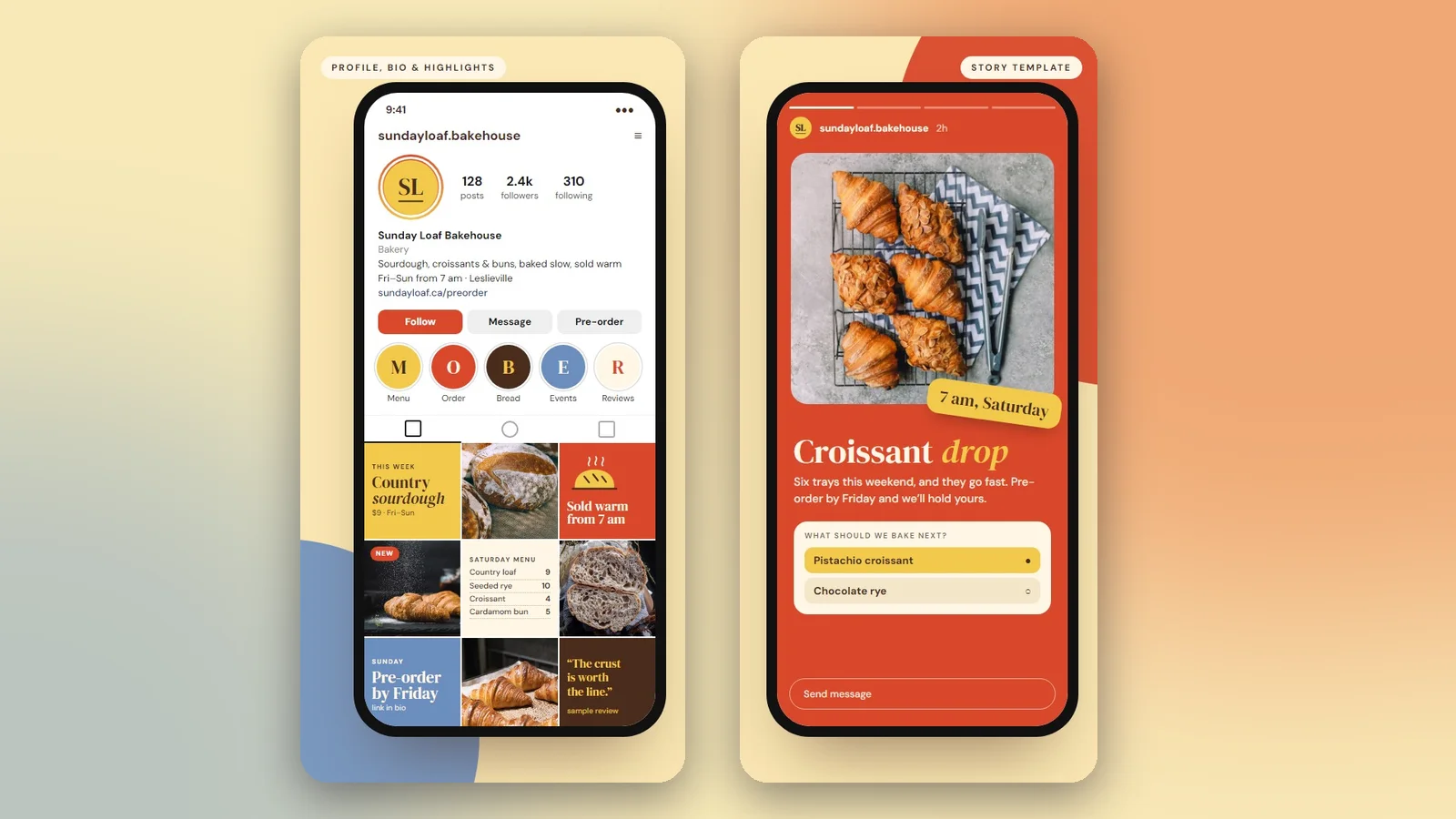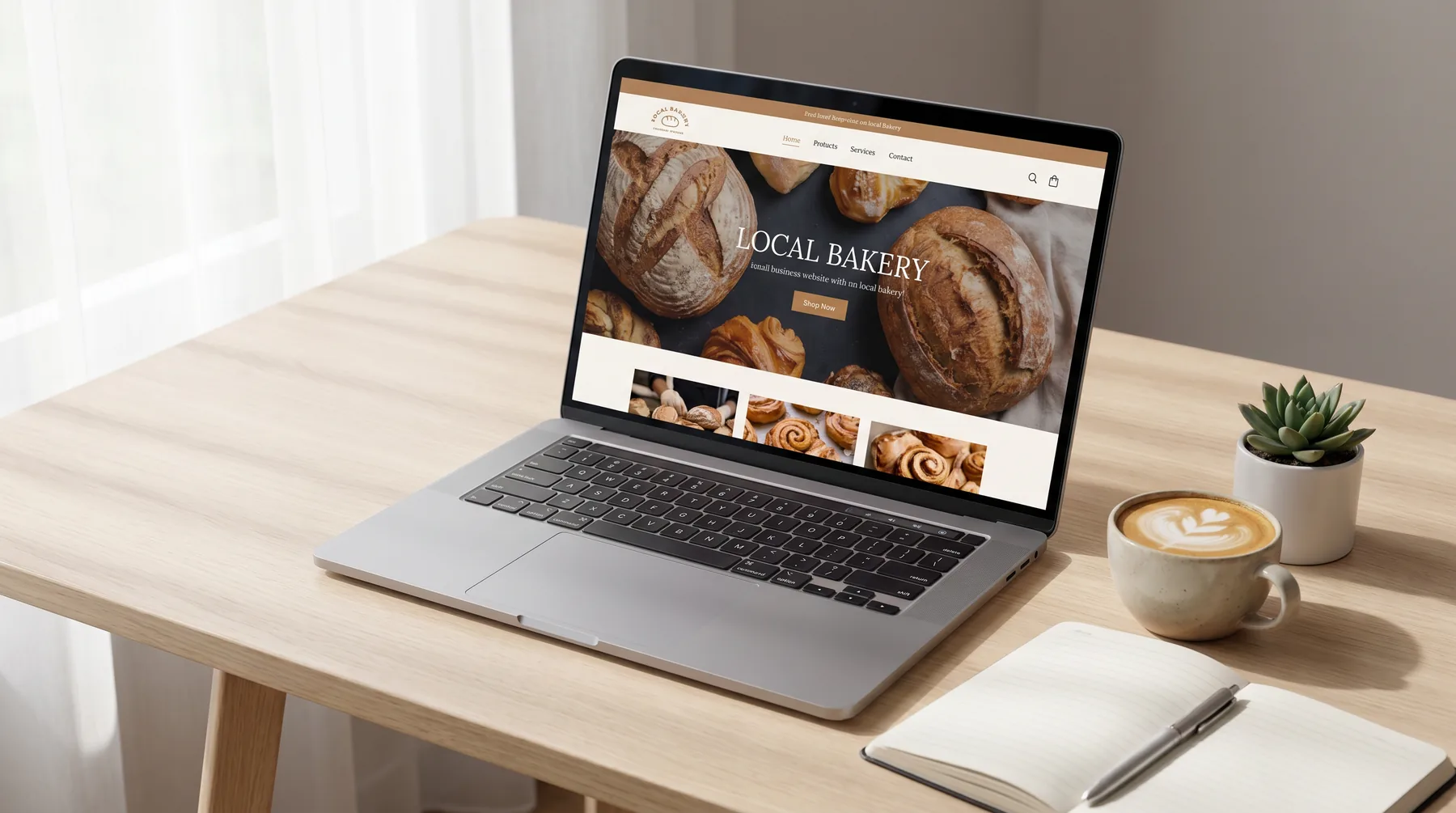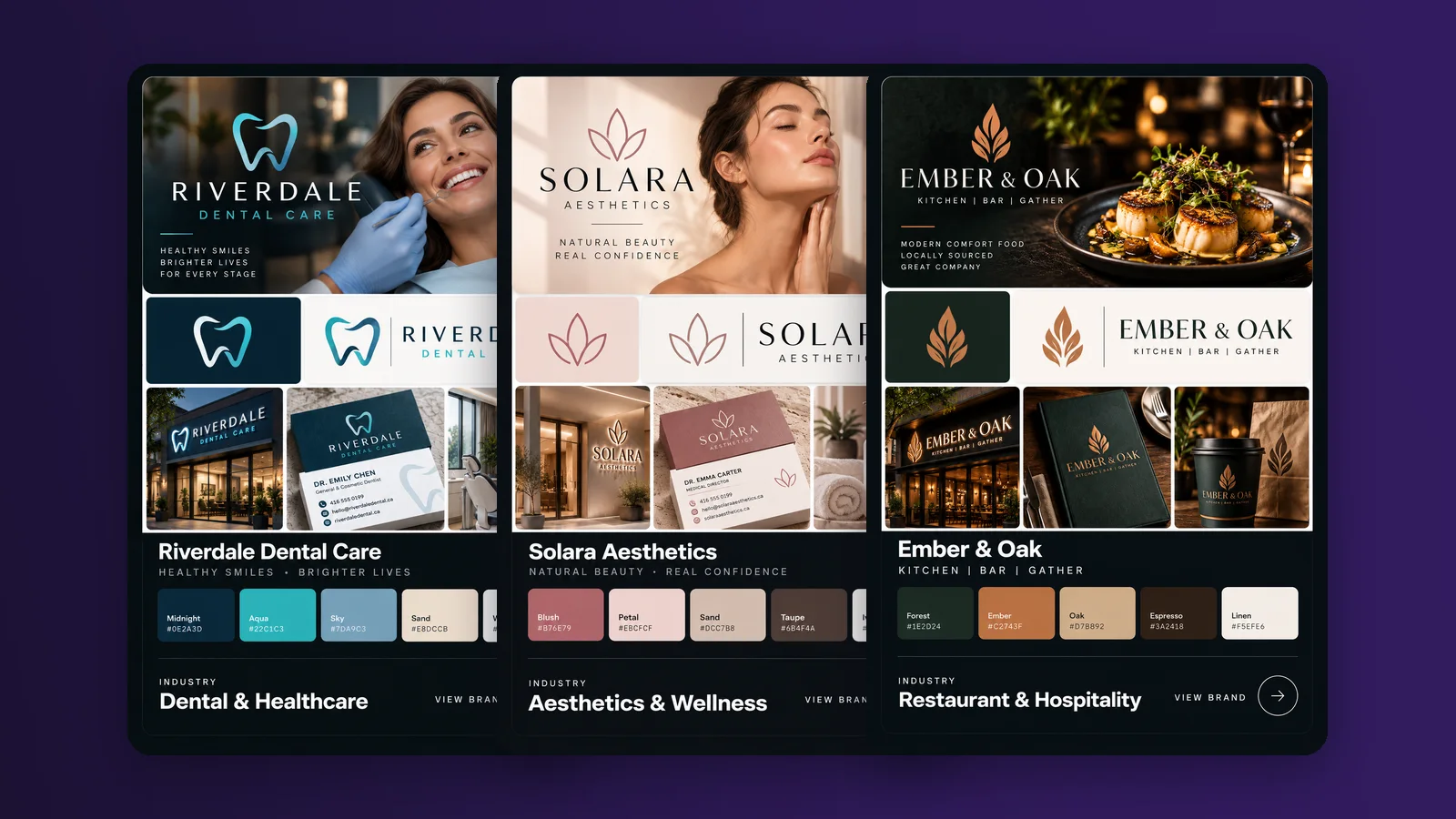
Ask ten people what a brand is and most will say “the logo.” The logo is one piece. A brand identity is the whole set of visual decisions that make a business recognisable: what it looks like on a sign, a menu, a box and a phone screen.
What is actually in a brand identity
A complete identity is a small system, not a single image. The pieces are:
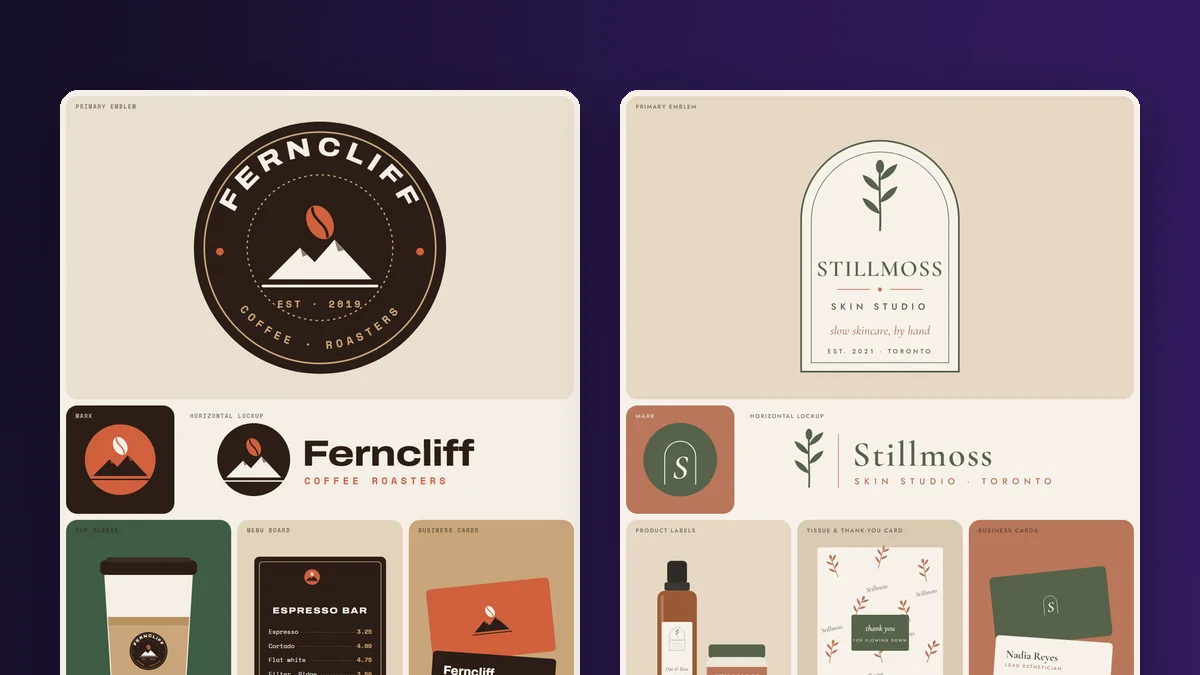
- A logo system. A primary emblem, a simple monogram for small spaces, a horizontal version, and one-colour versions for stamps, embroidery and single-colour printing.
- A colour palette. A handful of colours with exact values, so the shade on your website matches the shade on your boxes.
- Typography. A pairing of typefaces for headings and text, with a note on when to use which.
- Brand guidelines. A short document that writes the rules down, so the next person who designs something for you gets it right.
- Applications. The identity applied to real things: business cards, packaging, menus, signs, social posts.
Why the “system” part matters
A logo on its own works once. A system works every time. When the colours, type and marks are decided in advance, your website, your packaging and your Instagram all look like the same business, even when different people make them. It also saves money later, because nobody has to guess what your brand looks like.
What you should be handed at the end
This is where many small businesses get caught out. A brand identity should come with files you own and can hand to any printer or developer:
- The logo as vector files, plus PNGs for everyday use
- One-colour and reversed (light-on-dark) versions
- The palette with exact colour values for screen and print
- The typefaces, with a note on how they are licensed
- The guidelines document
If all you were given is a JPEG of your logo, you own a picture, not a brand identity.
When to do it
Ideally before the website and the packaging, because both are easier to design when the identity already exists. If your business is established but the branding has never matched the quality of what you do, a refresh is just as valid: keep what people already recognise, and tidy the rest into a system.
Questions worth asking any designer
- Will I own the final files, and in which formats?
- Do they include one-colour and small-size versions?
- Are the fonts licensed for my use, on a website as well as in print?
- Will there be guidelines, so someone else can follow the system later?
What it costs
Brand projects vary a great deal with scope: a logo and palette is a much smaller job than an identity with packaging, print and signage. At Website Mill they are quoted per project, and the price is agreed before any work starts. You can see what a project includes on our brand identity page.